Before or after the concert
Walk by the Theatre of Marcellus
A walking order for the evening around San Nicola in Carcere: the Theatre of Marcellus, the Portico d'Ottavia, the old Jewish quarter and Tiber Island.
Book the Four Seasons concert ↗Quick answer
The basilica stands beside the Theatre of Marcellus, and a short walk from there leads to the Portico d'Ottavia, the old Roman Ghetto and the Tiber Island. All four are places to see from the street, each with its own layer of Roman history. Allow extra time and keep the concert's start time in mind.
The Theatre of Marcellus
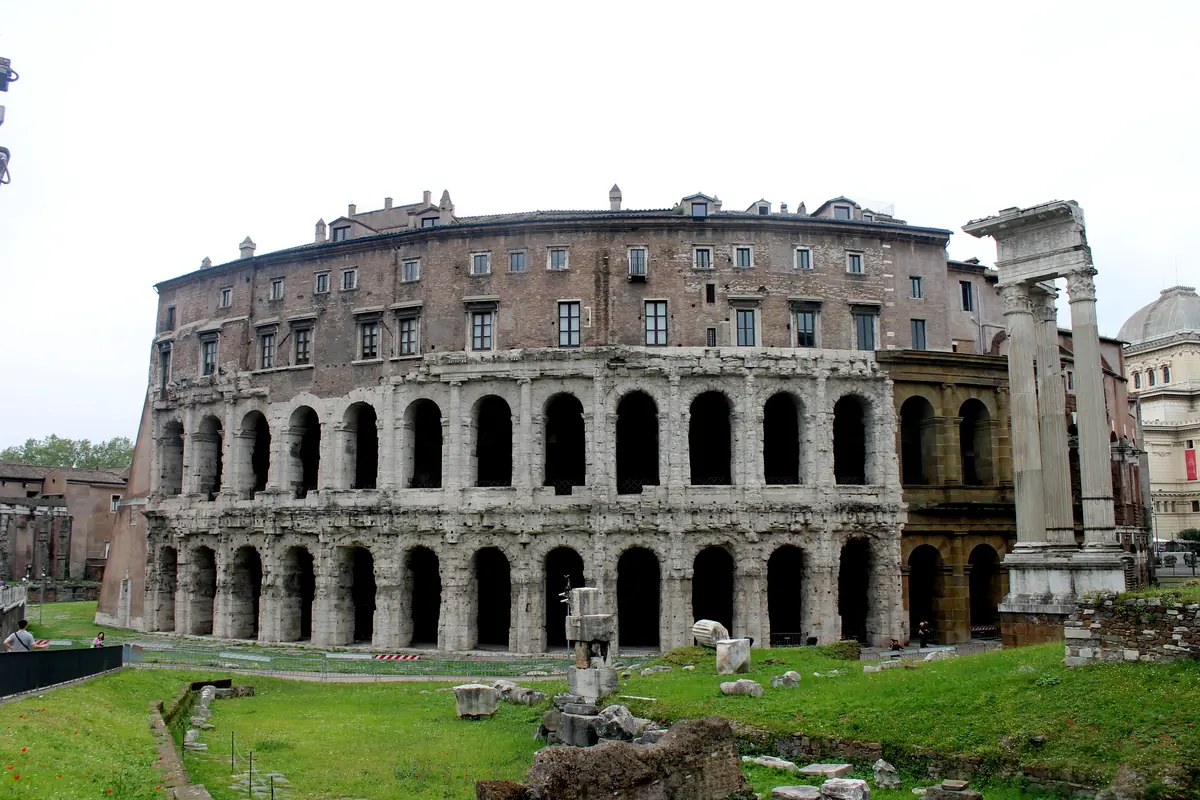
The Theatre of Marcellus was an ancient open-air theatre built in the closing years of the Roman Republic and inaugurated by Augustus in 12 BC. It was named after his nephew Marcus Claudius Marcellus. It was 111 metres in diameter and the largest theatre in ancient Rome. In the sixteenth century it was converted into a palazzo, and its upper floors are now divided into multiple clubs.
Starting from the basilica
The church of San Nicola in Carcere sits on the Forum Holitorium, the ancient fruit and vegetable market, and the Theatre of Marcellus is one of the sights Wikipedia lists nearby. The Pierleoni family, who in the 11th century rebuilt the theatre as a fortress, were also linked to the church. So the first two stops on this walk are connected by more than a street name.
The Portico d'Ottavia
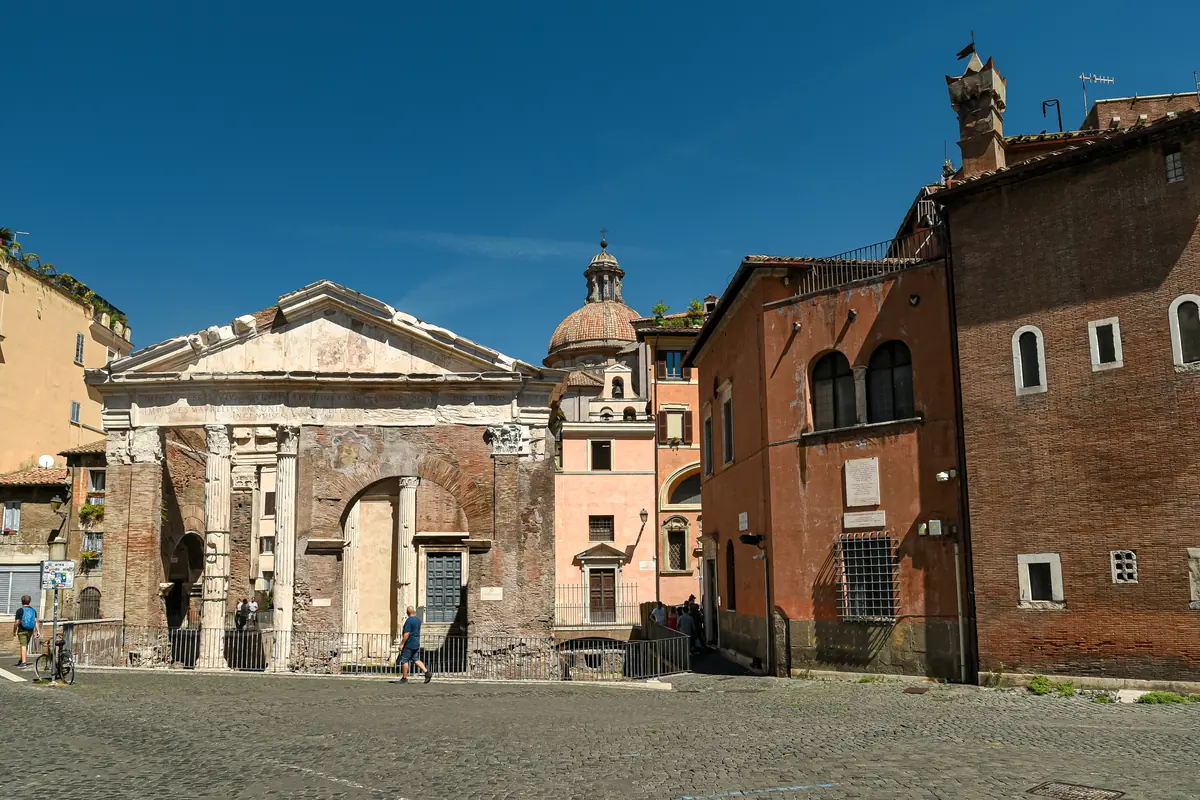
The Porticus Octaviae was a colonnaded structure that enclosed the temples of Juno Regina and Jupiter Stator and a library. Augustus rededicated it to his sister Octavia. An arch built after an earthquake in 442 still stands. The church of Sant'Angelo in Pescheria was built on its ruins around the year 770, and the portico served as a fish market from the medieval period until the end of the 19th century.
The old Jewish quarter
The Roman Ghetto was established in 1555 by Pope Paul IV in the area around the Via del Portico d'Ottavia, close to the Tiber and the Theatre of Marcellus. It was a walled quarter whose gates were locked at night, and it was controlled by the papacy until the capture of Rome in 1870. The Jewish community of Rome is probably the oldest in the world outside the Middle East. The streets here are worth walking with that history in mind.
Tiber Island
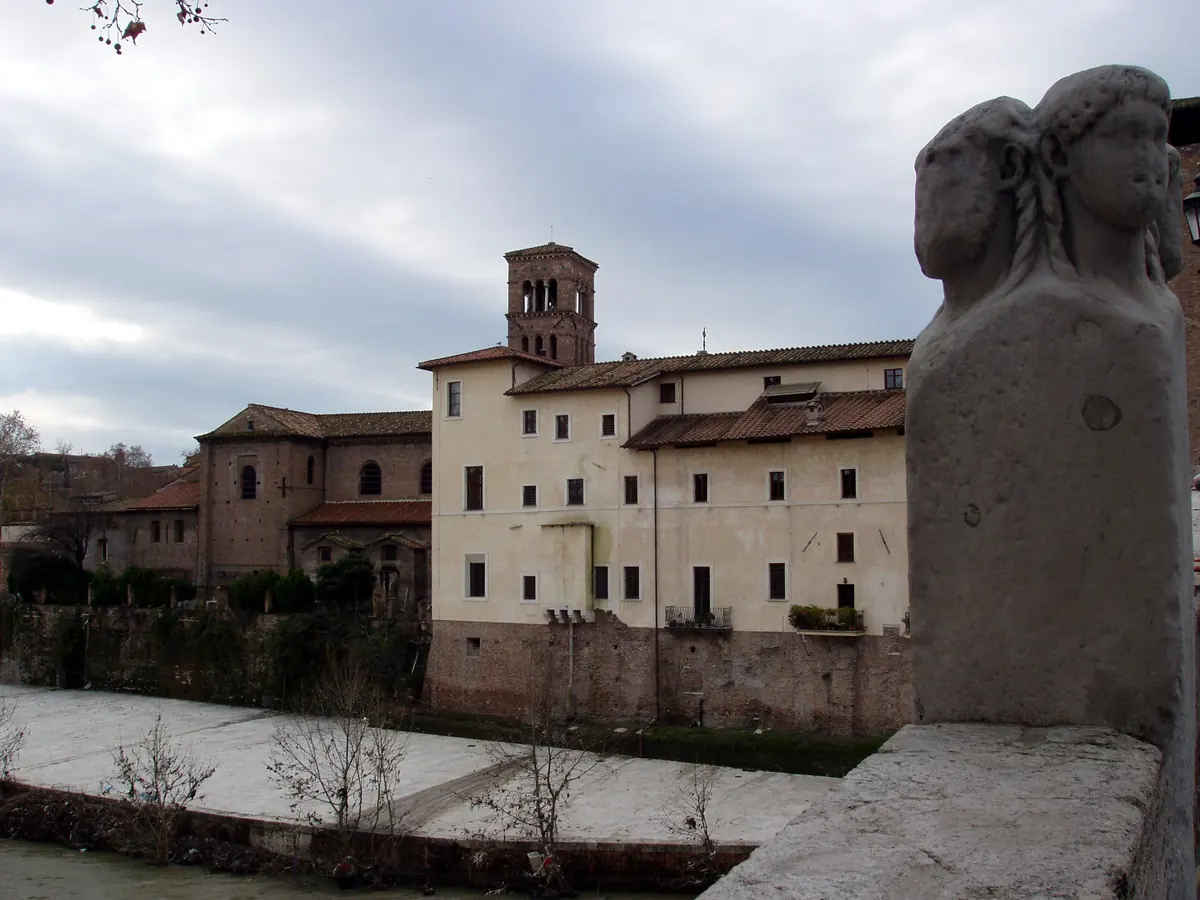
The Tiber Island is the only river island in the stretch of the Tiber that runs through Rome. It is boat-shaped, about 270 metres long and 67 metres wide, and the Ponte Fabricio, the only original bridge in Rome, links it to the Field of Mars. The island has long been associated with medicine and healing, and it holds the 10th-century basilica of San Bartolomeo all'Isola.
The island and its legend
Tiber Island was once the site of a temple to Aesculapius, the Greek god of medicine and healing. In 293 BC, during a plague, the Roman Senate was told to build a temple to him, and the legend says a sacred snake brought from Epidauros swam to the island, so the temple was built where it landed. Travertine facing was later added to make the island resemble a ship's prow and stern, with an obelisk as the mast.
Fitting it to the concert
Walking after the concert is easiest, since you will already be beside the theatre. If you walk first, leave a comfortable margin: your confirmation shows the start time, and a seat is easier to find before the music begins. Keep to the street, wear shoes for old paving and remember that the walk is five places seen from outside, not a set of tickets. Nothing in this guide is part of the concert booking.
Frequently asked questions
Is the Theatre of Marcellus open to visit?
Wikipedia says its upper floors are divided into multiple clubs, so the usual way to see it is from the street.
What is the Roman Ghetto?
A walled Jewish quarter established in 1555 by Pope Paul IV, controlled by the papacy until 1870. Its streets are near the Theatre of Marcellus.
Is Tiber Island worth the walk?
It is the only river island in Rome's stretch of the Tiber, and the Ponte Fabricio, the only original bridge in Rome, leads to it.
Sources